Early access · Paid ads beta

Stop stitching ad reports.
Start making better budget decisions.

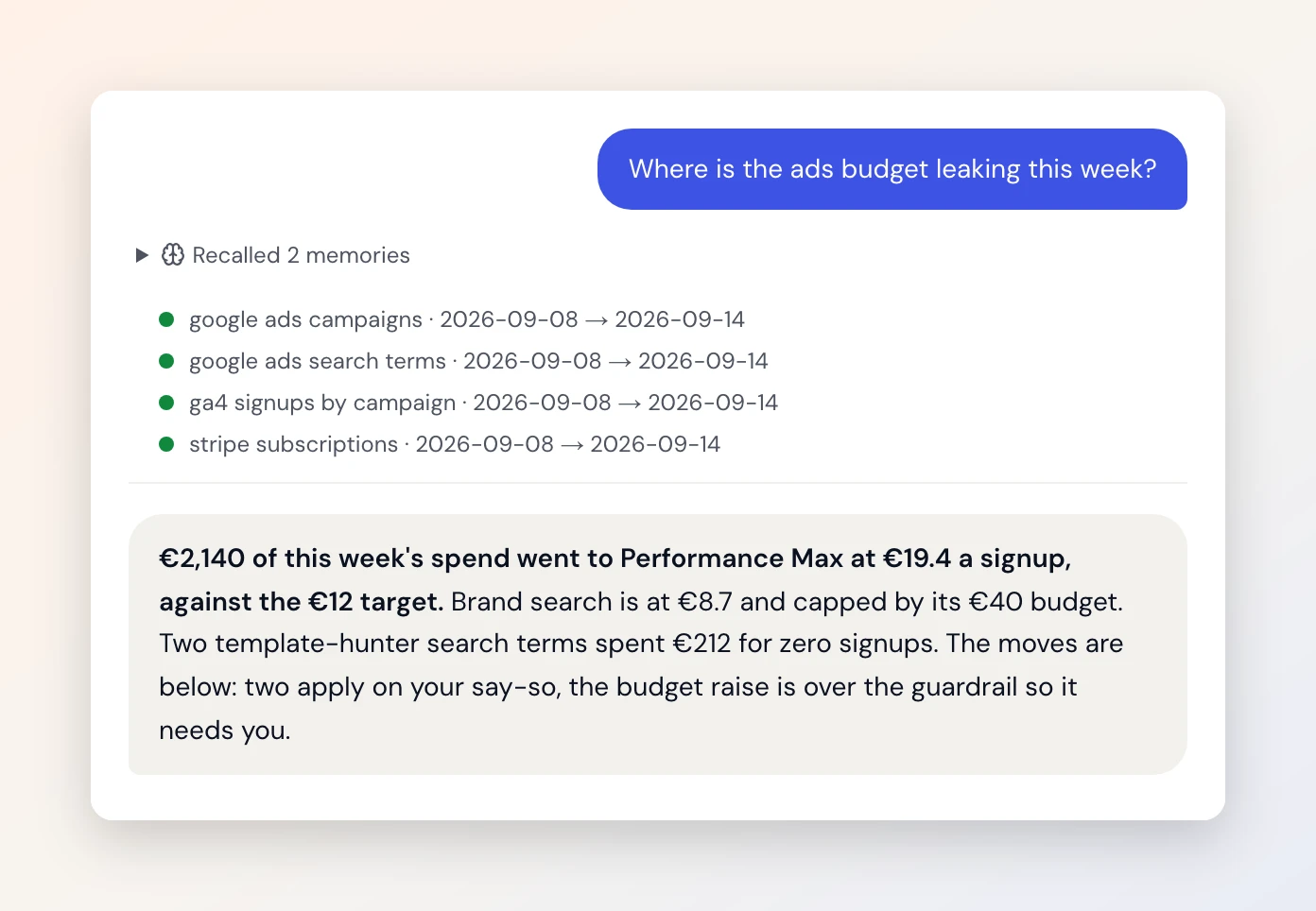
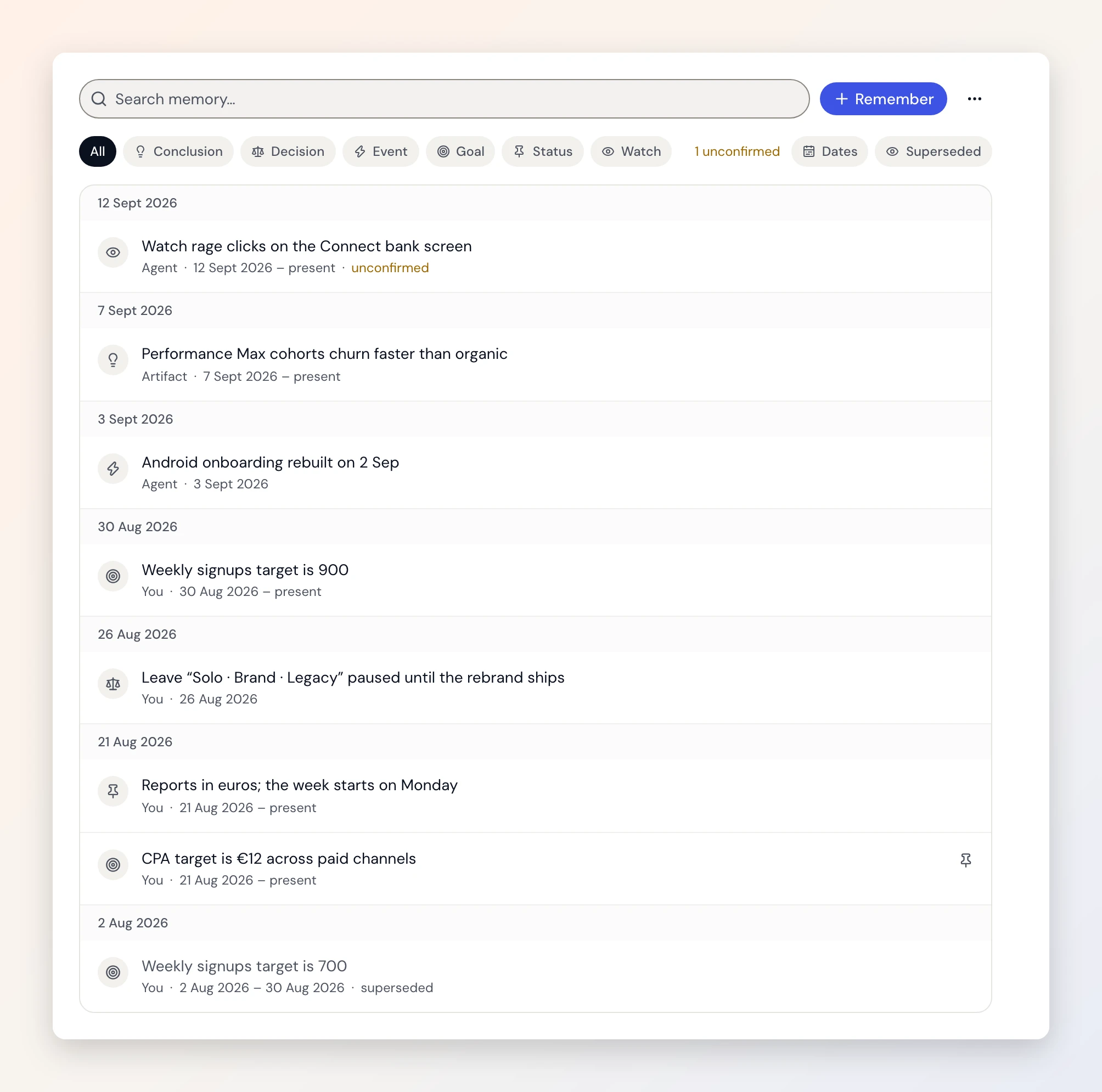
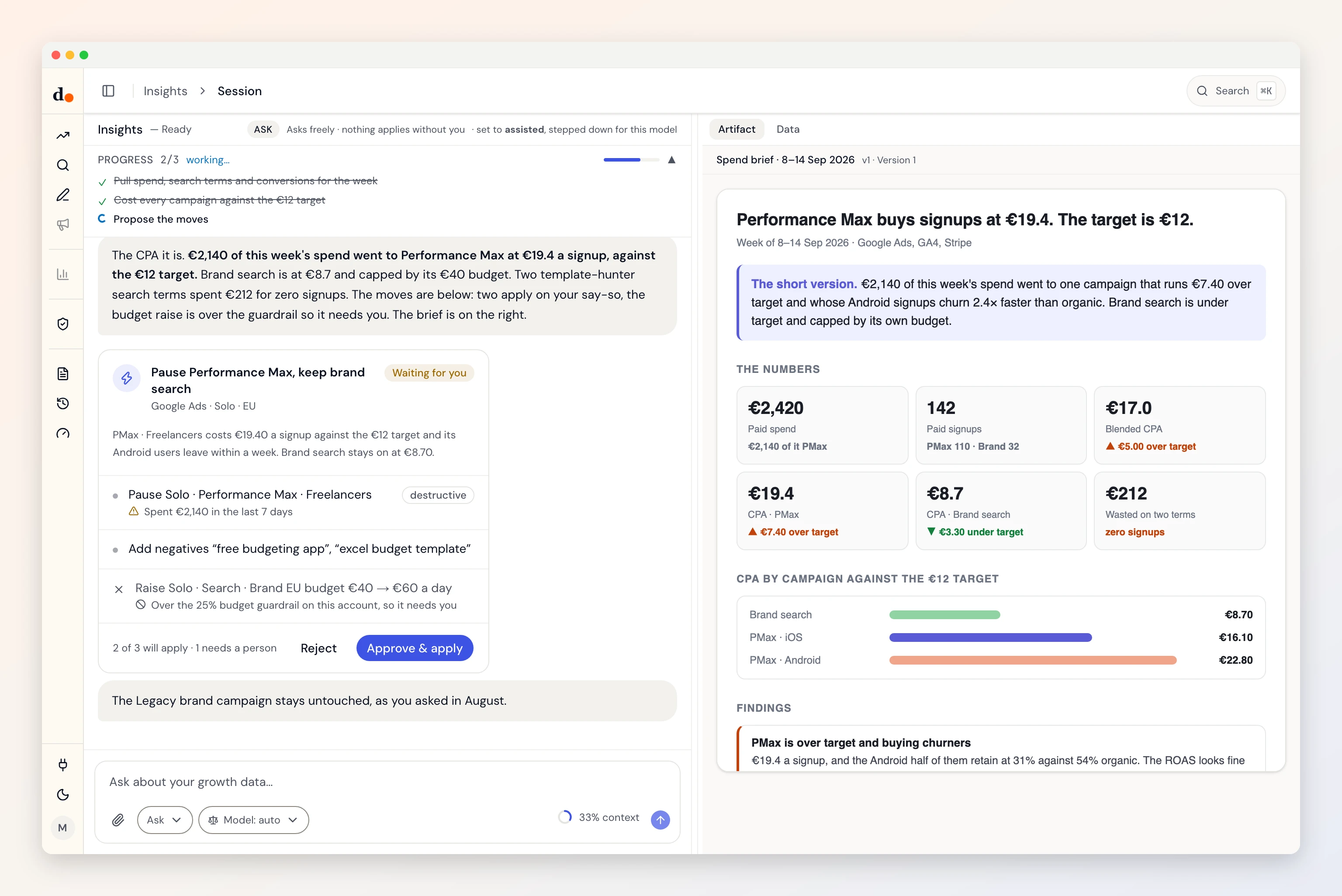
Duct connects Google Ads, Meta, LinkedIn, and X into one daily intelligence brief with cross-channel signals and clear next actions.

Free during beta · No credit card · For performance marketers at 20–200 person companies

or try the live demo ↓ — no signup required

Connects to the platforms you already run

The Problem

The signal is in your platforms.
But none of them talk to each other.

  • Google says ROAS is up. Meta says CPA spiked. Your spreadsheet says something else entirely. You don't know which to trust.
  • A campaign that crushed it last month is tanking now. You don't know if it's the creative, the audience, or the algorithm.
  • You spend four hours every week pulling CSVs from three platforms to build a report that's already stale by Monday.
Google Ads
Google Ads
Meta Ads
Meta Ads
X / Twitter
Twitter / X
HubSpot
HubSpot
✦ After Duct Meta CPA spike was audience overlap with Google — excluding existing Google converters cut Meta CPA by 24%.

Interactive Demo

Your ad stack. One brief.

This is example data — built to show exactly what Duct surfaces every morning.

Step 1 of 4

Which platforms do you run ads on?

Select all that apply — Duct correlates signals across everything you pick.

Select at least 2 to see cross-channel signals

Step 2 of 4

What are you optimising for?

Duct watches only what moves your number — not everything, just the right things.

Step 3 of 4

Duct is analysing your stack…

Using 90 days of example data from your selected platforms.

Reading campaign performance data…
Mapping cross-channel conversion paths…
Surfacing cross-platform signals…

Step 4 of 4

Your report is ready

Here's what Duct found across your ad stack.

7-day spend (indexed)

ROAS by campaign

CAC

ROAS

Spend

Conversions

View full report →

Free during beta · Connects in under 5 minutes · No data stored without your approval

How It Works

Clarity in three steps

01

Connect your ad stack

One-click OAuth integrations to Google Ads, Meta, Twitter, and your CRM. Duct reads — it never writes or modifies anything. Under 5 minutes to set up.

02

Set your north star metric

Tell Duct whether you care about CPL, ROAS, pipeline-influenced revenue, or CAC. It watches only what affects your number — not everything, just the right things.

03

Get your daily ad brief

A morning digest with cross-platform correlations, budget reallocation signals, and anomaly alerts — ready before you open a single ad dashboard.

Features

Built for marketers who own their number

🔗 Attribution

Cross-platform signal mapping

See how Google search intent feeds Meta retargeting, how organic content amplifies paid conversion, and which channels compound vs. cannibalise each other.

📬 Digest

Daily ad intelligence brief

A crisp morning summary of what moved across all platforms, what correlated, and what to act on today. Reads in under 2 minutes — no dashboards required.

🚨 Alerts

Creative fatigue & anomaly detection

Get a Slack ping when a campaign suddenly shifts — CTR drops, CPA spikes, or budget pacing goes off-track — before you notice it in a Monday report.

💰 Budget

Cross-channel reallocation signals

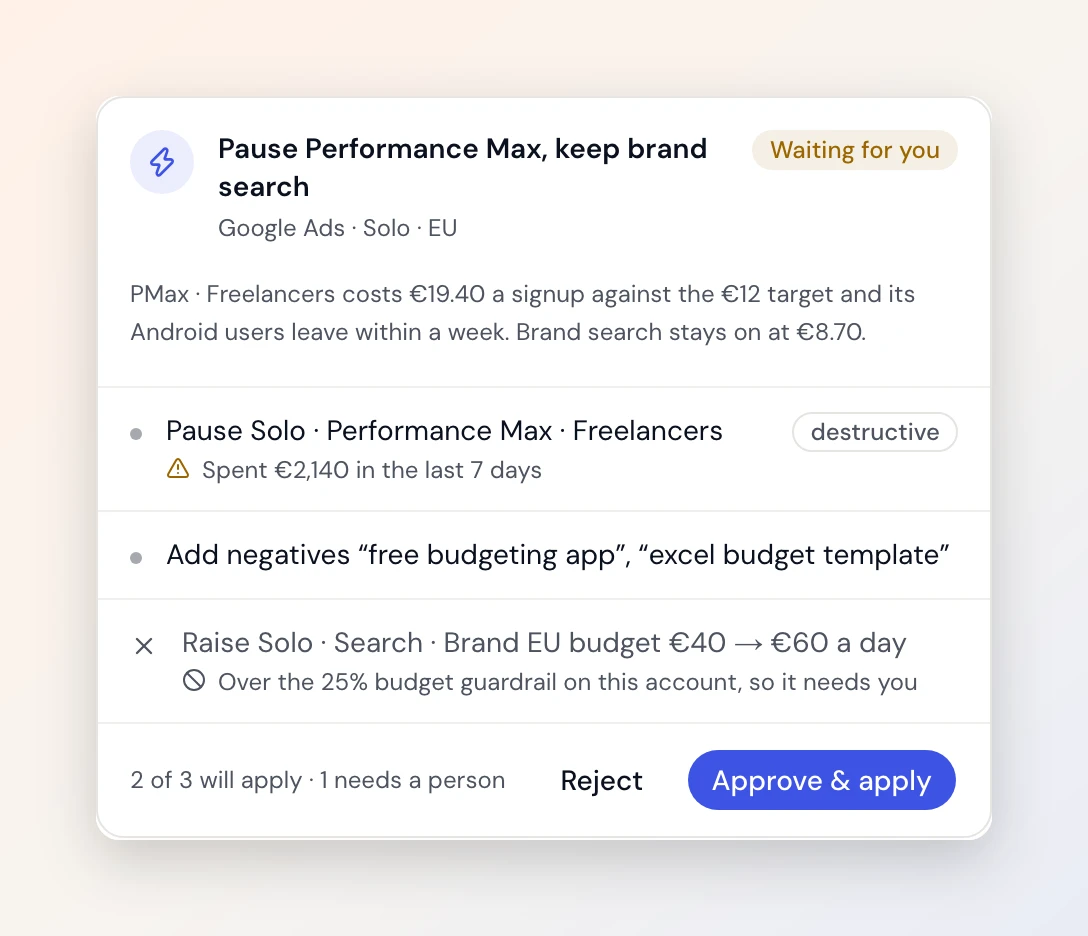
"Where should I shift $500 this week?" Just ask. Duct queries pipeline data across your ad platforms and CRM and returns a plain-English recommendation.

Who It's For

The marketer who owns paid without a data team

You're running three platforms, reporting to a founder, and making budget calls without a proper attribution model. You need cross-channel clarity, not another dashboard.

That's me — get early access →
Performance Marketer20–200 person SaaS
Perfect fit
Growth LeadOwns paid + organic
Great fit
Founding MarketerWearing many hats
Great fit
Enterprise Media Buyer500+ with dedicated agency
Not yet
3+Ad platforms at launch
~4hSaved per marketer per week
10minTo first insight after setup
0Spreadsheets required

FAQ

Frequently asked questions

What is Duct for paid ads?

Duct is a cross-platform ad intelligence tool that connects Google Ads, Meta, LinkedIn, and Twitter into one daily brief. Instead of pulling CSVs from each platform, you get cross-platform correlations, creative fatigue alerts, and budget reallocation signals delivered every morning. Built for performance marketers at 20–200 person SaaS companies who run multi-platform campaigns without a data team.

How long does it take to connect my ad platforms to Duct?

Under five minutes. Duct uses one-click OAuth to connect Google Ads, Meta, LinkedIn, Twitter, GA4, HubSpot, Klaviyo, and TikTok Ads. No API keys to configure and no developer time required. You select your platforms, authorize read-only access, and your first daily ad intelligence brief arrives the next morning.

Does Duct modify anything in my ad accounts?

No. Duct operates in strict read-only mode. It connects through official platform APIs to read your performance data but never creates, modifies, or deletes campaigns, budgets, or creatives. OAuth tokens are stored server-side, all data in transit is encrypted via TLS, and no data is stored without your explicit approval.

How is Duct different from building cross-platform ad reports in spreadsheets or dashboards?

Spreadsheets and dashboards show you what happened — Duct tells you what to do about it. Instead of manually pulling CSVs from three platforms and merging them weekly, Duct automatically correlates data across Google Ads, Meta, and LinkedIn to surface creative fatigue, budget reallocation opportunities, and cross-channel attribution gaps that static reports miss entirely.

How much does Duct for paid ads cost?

Duct is free during the beta period with no credit card required. We are onboarding the first 25 teams personally, and every team gets a setup call and direct access to the founders. Paid plans will be announced after beta, and beta users will be grandfathered into early pricing.

What kind of insights does the daily ad intelligence brief surface?

Each morning, Duct delivers cross-platform attribution analysis, creative fatigue alerts flagging ads losing effectiveness, budget reallocation signals showing where to shift spend, and anomaly detection for unexpected metric changes. It can spot when Google ROAS rises while Meta CPA spikes simultaneously — a cross-channel pattern no single-platform dashboard reveals.