CTR Calculator for growth teams
Your message performance is only as clear as your click signal. Calculate CTR with target lift scenarios instantly — channel-ready and no spreadsheet cleanup.
Your Results
One CTR, once. The question is which creative is tiring.
Duct reads your ads, analytics and revenue tools, answers that question, and proposes the change. You approve it.
What this means
CTR tells you who clicked. It doesn't tell you whether that traffic produced business impact.
Duct reads CTR beside CPC, conversion rate and what each channel earned, and names the creative or the audience to fix first.
How Duct works →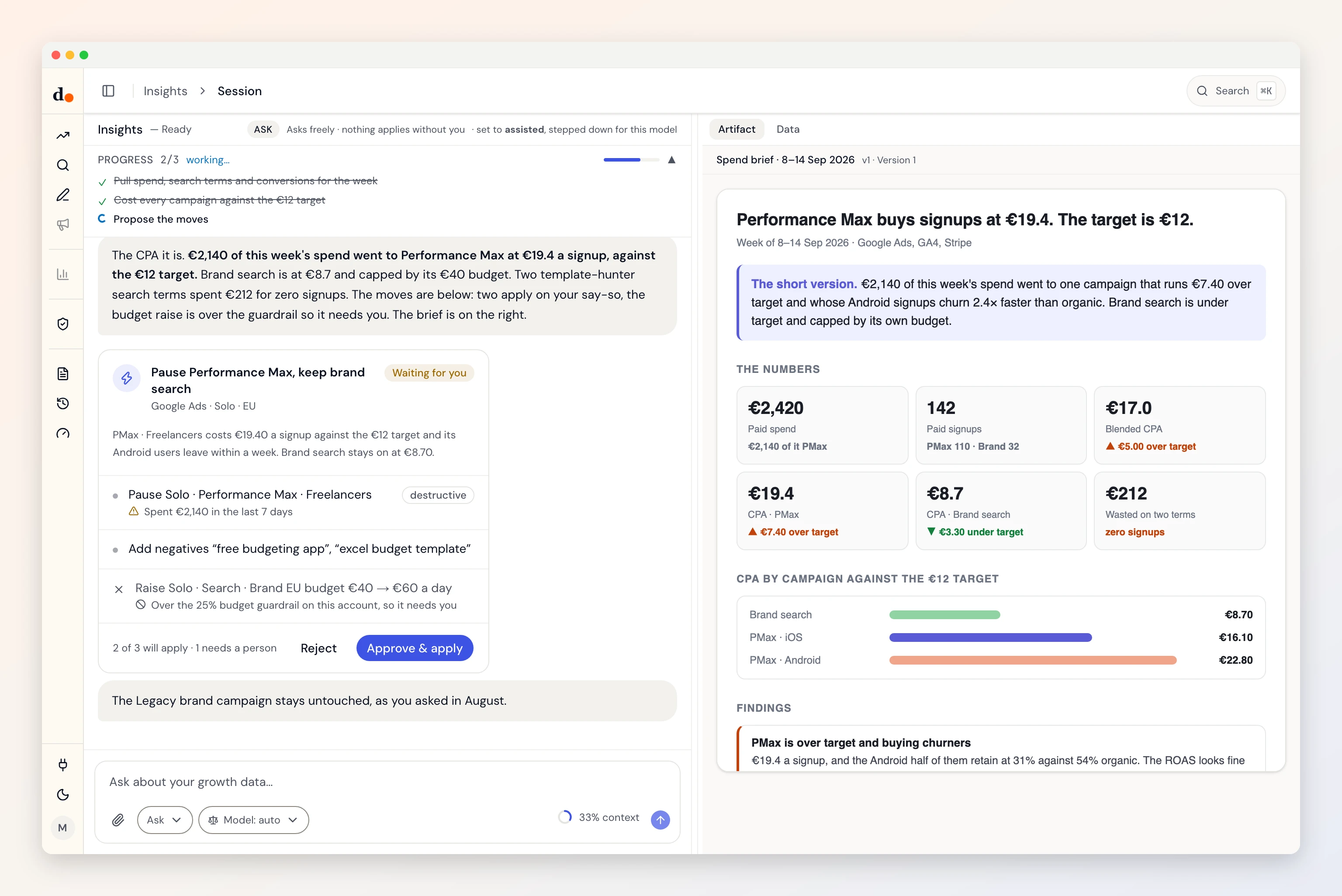
How the calculator works
This tool uses standard click-through rate formulas:
- CTR = Clicks ÷ Impressions × 100
- Projected clicks at target CTR = Impressions × (Target CTR ÷ 100)
- Required CTR for target clicks = Target Clicks ÷ Impressions × 100
CTR helps normalize performance by exposure. It is the fastest way to compare creative and keyword relevance across campaigns with different impression volumes.
Why CTR matters
Low CTR usually signals a relevance gap: weak hooks, poor targeting, or low intent match. Even if CPC looks fine, low CTR can hide quality issues that later hurt conversion rates and cost efficiency.
For organic channels, CTR is a headline diagnostic. For paid channels, it is both a quality signal and an early warning for creative fatigue.
Limitations
- CTR alone does not indicate conversion quality or downstream revenue impact.
- Benchmarks vary significantly by channel, device, and audience intent.
- This calculator does not include position effects (for example ad rank or SERP placement).
- All calculations run in your browser. No data is sent or stored.
FAQ
Frequently asked questions
How do you calculate CTR?
CTR is calculated as clicks divided by impressions, then multiplied by 100. Example: 500 clicks from 20,000 impressions equals a 2.5% CTR.
What is considered a good CTR?
It depends on channel and intent, but many teams use rough bands: below 1% weak, 1-3% average, and above 3% strong for many ad and content contexts.
Can I use this for Google Ads and organic search?
Yes. The same formula works across Google Ads, Meta Ads, LinkedIn, email, and SEO as long as clicks and impressions come from the same timeframe and source.
Why might CTR be high but conversions low?
High CTR with low conversion often means your promise is attractive but landing-page intent match is weak. CTR measures click attraction, not post-click quality.
How can I improve CTR quickly?
Test stronger hooks, sharpen value propositions, align copy with intent, refresh creatives, and tighten targeting segments. Run controlled tests weekly for sustained lift.